
Watering
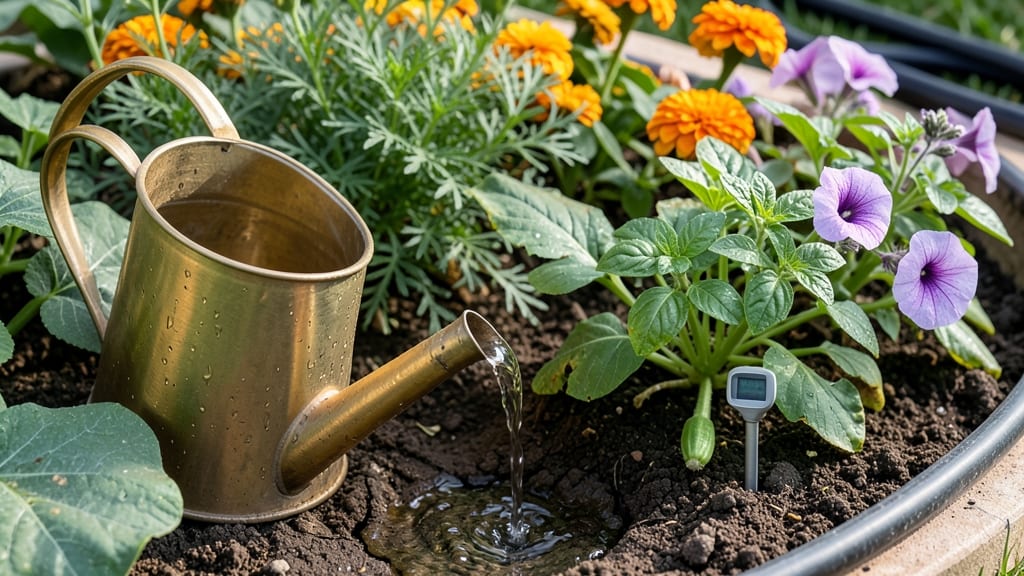
To water your garden in summer correctly, aim for deep soaks every 2 to 3 days—more often for thirsty veggies like tomatoes, less for drought-tolerant perennials.
Summer sun can turn your thriving garden into a crispy disaster if you don’t water correctly—but guessing won’t cut it. Learn the exact watering schedule your plants need to survive (and even thrive) during the hottest months, backed by soil science and expert insights.
Most gardeners overdo it, drowning roots while leaves still look dry. The key is checking soil moisture 1 inch down—if it’s dry, water deeply until it’s damp 6 inches deep. Clay soil holds moisture longer than sandy soil, so adjust your schedule accordingly.
Below, I break down watering by plant type, climate zone, and weather patterns—plus 5 signs you’re watering wrong. Save time, water, and your plants with a science-backed routine that actually works.
Summer watering frequency by plant type: a soil-tested schedule
Watering your garden in summer isn’t about following a one-size-fits-all rule—it’s about understanding your plants’ unique needs. Vegetables like tomatoes and peppers demand consistent moisture, while drought-tolerant flowers such as lavender thrive with minimal water.
Even soil type plays a role: clay holds moisture longer than sandy soil, so adjustments are key. Let’s break down the science-backed schedule to keep your garden lush without wasting water.
First, check your soil type—this determines how often you should water. Sandy soil drains quickly, requiring daily watering for thirsty plants, while clay soil retains moisture longer, needing less frequent but deeper watering. Loamy soil, the gold standard, balances drainage and retention perfectly.
Use a simple jar test: fill a jar with soil and water, then observe how quickly the water drains to identify your soil type.
Morning watering is always the gold standard, but timing matters. Watering between 6 AM and 10 AM reduces evaporation and fungal risks, while evening watering can lead to damp leaves overnight—perfect conditions for powdery mildew.
However, if you’re dealing with container plants, they may need water twice daily in extreme heat. Let’s dive into the exact schedule for your garden’s stars.
| Plant Type | Watering Frequency (Summer) | Best Time to Water | Soil Adjustments | Key Signs of Stress |
|---|---|---|---|---|
| Vegetables (Tomatoes, Peppers, Lettuce) | Every 1-2 days (deep soak) | Morning (6-10 AM) | Add mulch; sandy soil needs more frequent watering | Wilting leaves, dry soil 1" below surface |
| Flowers (Roses, Petunias, Marigolds) | Every 2-3 days (shallow to deep) | Early morning or late evening | Clay soil may need less; loamy is ideal | Drooping blooms, crispy edges |
| Shrubs (Boxwood, Hydrangeas, Lavender) | Every 3-5 days (deep watering) | Morning (avoid overhead) | Mulch heavily; drought-tolerant types need less | Yellowing leaves, dry branches |
| Trees (Young Fruit Trees, Maple, Oak) | Every 5-7 days (soak deeply) | Early morning | Water at root zone; avoid wetting bark | Leaf scorch, dry soil 2" deep |
| Drought-Tolerant (Succulents, Cacti, Yarrow) | Every 7-14 days (rare deep water) | Morning (avoid wetting leaves) | Use gravelly soil; minimal mulch | Shriveled leaves, sunken appearance |
For vegetables, prioritize deep watering—aim for 1-2 inches of water per week, delivered at the soil level rather than overhead. Leafy greens like lettuce and spinach need consistent moisture, while root crops such as carrots and beets benefit from infrequent but thorough watering.
If your soil is sandy, you’ll need to water more frequently, sometimes even daily during heatwaves.
When it comes to flowers, annuals like petunias and marigolds are thirstier than perennials such as lavender or coneflowers. Roses are the divas of the flower world—they demand deep, consistent watering at the base, not just a sprinkle on the leaves.
If you notice drooping blooms by midday, it’s a sign they’re begging for hydration. Adjust your schedule by watering every 2-3 days in extreme heat.
Shrubs and trees often get overlooked, but they’re just as critical to your garden’s health. Young trees need deep, infrequent watering to encourage strong root growth, while established trees can handle every 5-7 days once their roots are deep. Mulch is your best friend here—apply a 3-inch layer of organic mulch around the base to retain moisture and regulate soil temperature.
If you’re dealing with container plants, they’re the most vulnerable in summer heat. Pots dry out 3-5 times faster than in-ground soil, so check moisture daily. Herbs like basil and cilantro may need watering twice a day during heatwaves, while succulents and cacti
5 Signs your garden is overwatered (or underwatered) in summer heat
Summer heat tricks even experienced gardeners into overwatering—or worse, underwatering—their plants. The key is learning to read your garden’s visual cues and soil signals before damage sets in. Yellowing leaves, wilting stems, or moldy soil aren’t just random; they’re your plants’ way of screaming for help.
I’ve seen root rot spread through tomato beds in just 48 hours from overwatering, while drought-stressed herbs crisp up by noon if neglected. The fix? Master these 5 warning signs and adjust your watering routine before it’s too late.
Your plants will thank you with lush, vibrant growth all season long.
How often to water garden in summer? The golden rule: Deep water 2-3 times per week (adjust for rain/soil type). Most gardeners overdo it—check soil 1 inch down before watering. Sandy soil needs daily checks; clay soil holds moisture 5-7 days. Morning watering (6-9 AM) reduces evaporation and fungal risks.
First, check for yellowing leaves starting at the base of the plant. This classic sign often means overwatering, as roots suffocate in soggy soil. But here’s the catch: underwatered plants can also yellow if they’re stressed.
The difference? Overwatered leaves feel squishy, while thirsty leaves are crispy to the touch. Run your fingers through the soil—if it’s damp 6 inches deep, you’re overdoing it.
Next, look for mushy stems or blackened roots when you dig gently around the base. These are red flags for root rot, a fungal infection caused by too much moisture.
If you spot white, fuzzy growth on leaves or soil, that’s powdery mildew, another overwatering side effect. Pull up a plant and inspect the roots—healthy roots are firm and white, while rotting roots smell foul and turn brown or black.
Wilting is another tricky sign because it can mean both overwatering and underwatering. The key difference? Overwatered plants wilt slowly and feel heavy, while underwatered plants wilt suddenly and feel light.
Test this by lifting the pot (for container plants) or gently tugging on the stem. If it resists, it’s thirsty; if it pulls out easily, the roots are drowning.
Don’t ignore pest outbreaks like aphids or spider mites, which thrive in stressed plants—whether from too much or too little water. Overwatered plants attract fungus gnats, while underwatered plants become magnet for mealybugs. Adjust your watering schedule and monitor for pests daily during heatwaves.
A quick spray of neem oil can save your plants if caught early.
Finally, soil crusting or white salt deposits on the surface signal overwatering with poor drainage. Break up the top inch of soil and check for hardpan (a dense layer that blocks water).
If your soil repels water like a raincoat, it’s time to amend with compost and reduce frequency. For underwatered soil, it’ll crumble easily and feel dry throughout—not just at the surface.