
How To
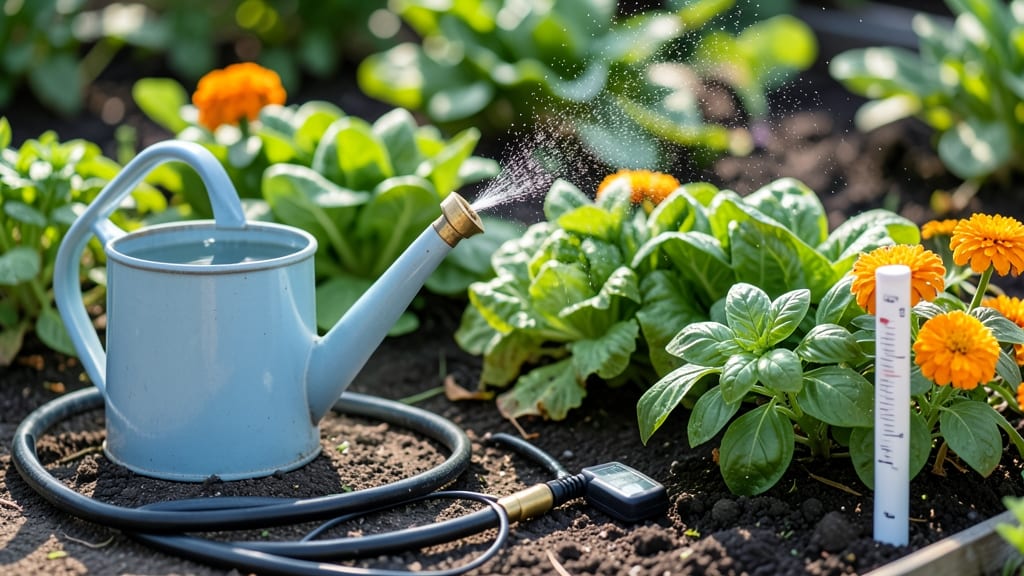
To water garden plants correctly, check soil moisture before your schedule says it's time — because guessing leads to wasted water or dead roots.
Overwatering kills plants faster than underwatering—yet most gardeners guess their watering schedule instead of using science-backed methods. The soil check method reveals exactly when your garden needs hydration without waste.
Think about it: a thirsty tomato plant in sandy soil needs watering every 2-3 days, while a drought-tolerant lavender thrives on once-a-week drinks. Your local climate and soil type change everything, so one-size-fits-all advice fails.
Here’s how to master the soil check method—a foolproof way to water plants perfectly every time, whether you’re a beginner or a seasoned gardener.
The 5-Step soil check method to water plants perfectly every time
I’ve learned the hard way that guessing how often to water garden plants leads to either soggy roots or parched leaves. The soil check method eliminates the guesswork by teaching you to read your garden’s thirst cues.
This science-backed approach adjusts for soil type, plant species, and even weather patterns—so you’ll never over- or underwater again. The key? Checking moisture at the right depth and time.
Most gardeners water based on a schedule, but plants need hydration when their roots are actually dry. The finger test is your secret weapon—it tells you exactly when to water, not just when you think you should.
I’ll walk you through the 5-step process, including how to adjust for sandy vs. clay soil and why morning watering beats evening. Let’s dive in.
🌱 Pro Tip: Grab a small notebook to track your soil’s moisture patterns. Over a few weeks, you’ll spot trends (like how your garden dries faster in July) and fine-tune your watering routine.
Your 5-Step Soil Check Routine
- 1 Choose the right time: Water in the early morning (before 9 AM) to reduce evaporation and fungal risks. Avoid evening watering, which can leave foliage damp overnight.
- 2 Test soil depth: Stick your finger 1-2 inches deep (for most plants) or 3-4 inches (for deep-rooted veggies like tomatoes). If it feels dry, it’s time to water. Sandy soil dries faster—check at ½-inch depth.
- 3 Adjust for plant type: Succulents and lavender need water only when soil is bone-dry. Herbs like basil and leafy greens prefer consistently moist (but not soggy) soil. Group plants with similar needs together to simplify care.
- 4 Water deeply: Use a slow, deep watering (10-15 minutes per zone) to encourage roots to grow downward. Shallow watering creates weak, surface roots that dry out faster. A soaker hose or drip irrigation makes this easy.
- 5 Monitor and adapt: Track your garden’s moisture over 2-3 weeks. Note how often you water in summer vs. spring and adjust for rainfall. Mulch (2-3 inches of straw or wood chips) retains moisture and cuts watering needs by 30-50%.
Let’s say you’re growing tomatoes in clay soil during a hot July. You’d check moisture at 3 inches deep because clay holds water longer. If the soil feels dry by mid-morning, water deeply for 15 minutes.
In contrast, sandy soil might need watering every other day because it drains quickly.
I once overwatered my pepper plants because I assumed they needed daily hydration like my lettuce. The leaves turned yellow, and the roots rotted—until I switched to the soil check method. Now, I water peppers only when the top 1 inch of soil is dry, and they thrive.
The method works for containers too: Lift pots to check weight—if it’s light, water it.
Another game-changer? Mulching after watering. A layer of mulch locks in moisture and keeps soil temperatures stable. I use straw mulch for vegetables and wood chips for perennials. It’s a simple habit that slashes my watering time by half. Plus, it suppresses weeds—double the benefit!
Don’t forget to account for weather changes. A heatwave might mean checking soil daily, while cool, cloudy days could stretch watering intervals to every 5-7 days.
Pay attention to leaf wilt (a sign of thirst) and soil crusting (a sign of overwatering). Your plants will tell you what they need if you listen.
For container gardens, the rules shift slightly. Pots dry out faster, so check soil at the edge of the container—if it’s dry, the roots inside are likely thirsty too. Terracotta pots need more frequent watering than insulated fabric grow
Watering frequency chart: how often to water by plant type and climate
Every plant has unique hydration needs, but soil type and climate dramatically change how often you should water. Sandy soil drains quickly, while clay soil holds moisture longer—meaning your tomatoes in sandy soil may need watering daily in summer, but lavender in clay soil might only need water once every 10 days.
Let’s break down science-backed schedules for common garden plants across three soil types and three climate zones.
Understanding your local climate zone (arid, temperate, or humid) is just as critical as knowing your soil. In arid climates, even drought-tolerant plants like rosemary may need deep watering every 3-4 days during heatwaves, while humid climates can cause fungal issues if you water too frequently.
Use this chart as your go-to guide, adjusting for seasonal shifts like hotter summers or rainier springs.
🌱