
Tools
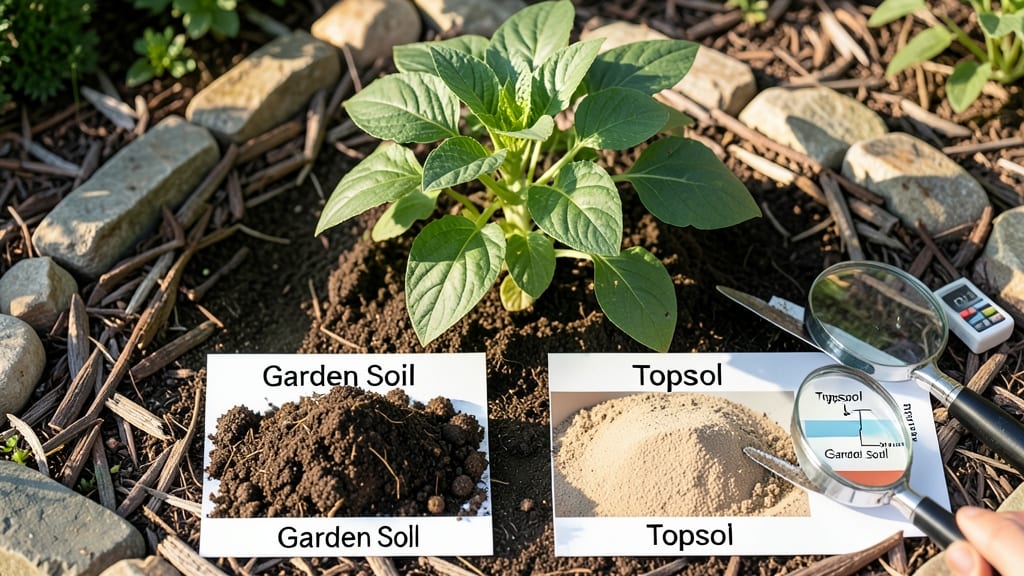
Garden soil and topsoil aren't the same: topsoil is the natural, nutrient-rich upper layer of earth, while garden soil combines topsoil with compost, sand, or other additives to boost plant growth and improve texture.
Topsoil forms naturally over centuries through decomposition and mineral breakdown, giving it a balanced mix of organic matter and minerals. Garden soil, on the other hand, is intentionally crafted to meet specific planting needs—whether that's better drainage for vegetables or richer nutrients for flowers. 🌱 The key difference lies in their purpose: topsoil is what you find in nature, while garden soil is what you create for optimal growing conditions.
For example, topsoil alone might struggle with clay-heavy textures, but adding sand and compost transforms it into the perfect planting medium.
If you're planning a vegetable garden, garden soil is usually the better choice because it's designed to support root development and nutrient uptake. Topsoil, however, is ideal for leveling uneven areas or establishing new lawns where you need a stable base.
Testing your soil's pH and nutrient levels can help determine which option—or blend of both—will work best for your project.
💡 In This Article
- Topsoil vs Garden Soil: Composition and Nutrient Breakdown
- When to Use Topsoil vs Garden Soil in Your Yard
Topsoil vs garden soil: composition and nutrient breakdown
Topsoil forms naturally through the slow decomposition of organic material like leaves, plants, and animal matter over decades or even centuries. This layer typically contains 5-10% organic matter by volume, along with essential minerals like nitrogen, phosphorus, and potassium.
The texture varies depending on location—sandy topsoil drains quickly but holds fewer nutrients, while clay-heavy topsoil retains moisture but can become compacted. 🌱 For example, a standard topsoil sample might measure a pH of 6.0-7.5, which is generally ideal for most plants, though some acid-loving species like blueberries prefer pH 4.5-5.5.
Garden soil, however, is a human-engineered blend designed to optimize plant growth. It often combines topsoil with 20-40% compost or aged manure to boost nutrient density, plus sand or perlite to improve aeration and drainage.
This artificial mix can achieve organic matter levels as high as 20-30%, creating a loamy texture that's ideal for root development. For instance, a well-formulated garden soil might contain 50% topsoil, 30% compost, and 20% sand, creating a crumbly structure that holds moisture without suffocating roots.
The key difference lies in how each soil type interacts with plant roots. Topsoil's natural composition provides a baseline of nutrients, but its structure may lack the ideal balance for heavy feeders like tomatoes or peppers.
Garden soil, however, is calibrated to support these demands—its higher organic content feeds microbial life that breaks down nutrients into plant-available forms. 🌿 For example, a tomato plant in garden soil might produce 30-50% more fruit than in unamended topsoil due to better nutrient availability and root aeration.
Another critical factor is water retention. Topsoil's natural porosity varies widely, while garden soil's amended structure creates consistent moisture retention. This is why gardeners often see less watering required when using garden soil—it holds moisture near roots while preventing waterlogging.
For instance, clay-heavy topsoil might stay soggy for days after rain, while properly amended garden soil drains excess water within 12-24 hours.
Consider the microbial ecosystem: garden soil hosts 10-100 times more beneficial bacteria and fungi than natural topsoil due to the added organic matter. These microorganisms decompose organic material, releasing nutrients in forms plants can absorb.
For example, compost-amended garden soil might contain 10,000-100,000 bacteria per gram compared to 1,000-10,000 in topsoil, creating a more active root zone.
Finally, the particle size distribution matters. Topsoil often contains a mix of sand, silt, and clay particles in whatever ratio nature provided, which can lead to inconsistencies.
Garden soil, however, is typically formulated to achieve a loamy texture—about 40% sand, 40% silt, and 20% clay—which provides the perfect balance of drainage and water retention for most plants. 🌱