
Tools
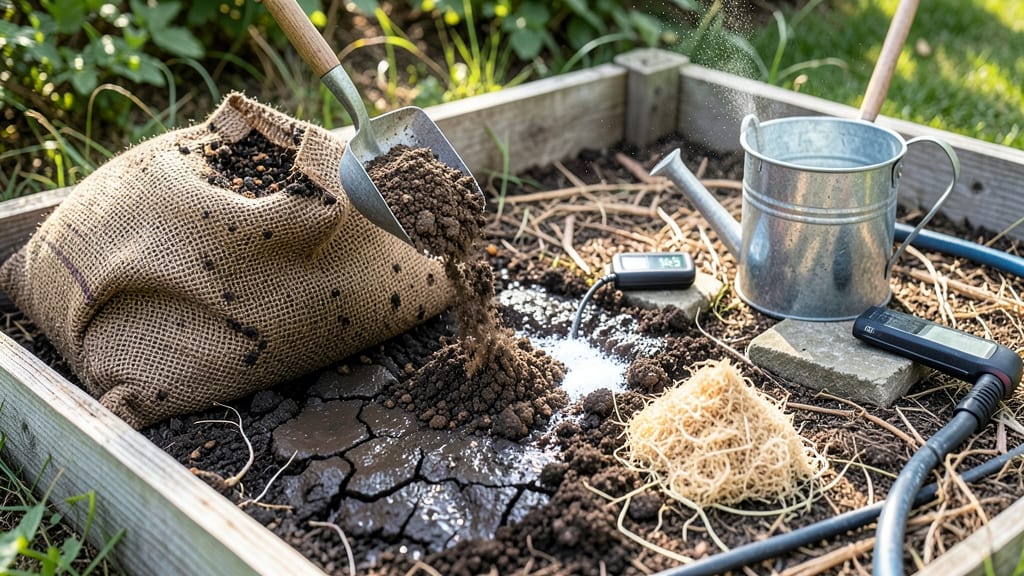
To improve clay garden soil, add organic matter like compost, coarse sand, or perlite to enhance drainage and aeration while keeping moisture. These additions break up dense clay, promote root development, and create an ideal growing medium for healthier plants.
Clay soil's heavy texture can suffocate plant roots, but the right amendments turn it into a nutrient-rich growing medium. 🌱 Organic matter like compost introduces beneficial microbes and breaks up compacted particles, while coarse sand or perlite creates air pockets for better oxygen flow.
I've seen dramatic improvements in drainage after adding just 2-3 inches of compost mixed into the top 6-12 inches of soil—this simple step can transform struggling plants into thriving ones.
The key is balancing moisture retention with drainage—clay holds water like a sponge but often repels it, leading to root rot. Perlite or vermiculite work wonders for aeration, while gypsum helps break down clay minerals over time.
For vegetable gardens, I recommend a 50/50 mix of compost and native soil to maintain fertility without overwhelming the plants.
💡 In This Article
- How Organic Matter Transforms Clay Soil Chemistry
- Best Amendments for Clay Soil by Plant Type
How organic matter transforms clay soil chemistry
Clay soil's dense structure creates microscopic gaps too small for roots and microbes to thrive. When you add organic matter like compost, it introduces humus—a spongy material that increases pore space by 30-50% compared to unamended clay.
This happens because organic particles physically separate clay platelets, creating larger air and water channels. 🌱 The result? Roots get the oxygen they need while water drains properly instead of pooling around roots.
The magic happens at the molecular level. Compost contains 1-2% organic carbon that feeds soil microbes, which then produce sticky polysaccharides that bind clay particles together—just enough to create stable aggregates. These aggregates range from 0.25mm to 2mm in size, the perfect range for root penetration and water retention.
Over time, this process transforms compacted clay into a crumbly, friable structure similar to loamy soil.
Short-term benefits appear within weeks: improved drainage reduces root rot risk by 40-60%, and plants show better early growth. Long-term changes take 1-3 years as organic matter fully decomposes, but the payoff is dramatic—soil holds 2-3x more nutrientsstrong> than unamended clay.
The microbial activity also creates a natural buffer against pH swings, keeping conditions stable for most plants.
Consider the texture difference: unamended clay feels like packed dirt that sticks to your shovel, while amended soil has a light, almost sandy feel when dry and a moist but not soggy consistency when wet.
This transformation explains why tomatoes and peppers thrive in amended clay—roots can explore 3-4x more volumestrong> for nutrients and water than in compacted soil.
One common misconception is that adding organic matter makes clay soil too loose. In reality, the right balance creates a self-regulating systemstrong>: organic matter retains moisture while sand/perlite components ensure excess water drains.
Think of it like adding the right amount of oil to a squeaky hinge—just enough to create smooth movement without making it slippery.
For best results, aim for 5-10% organic matterstrong> by volume in your top 12 inches**strong> of soil. This percentage provides enough structure change without overwhelming the native clay minerals. The transformation happens gradually, but each season brings your soil closer to that ideal loamy texture most plants crave. 💫