
Picking
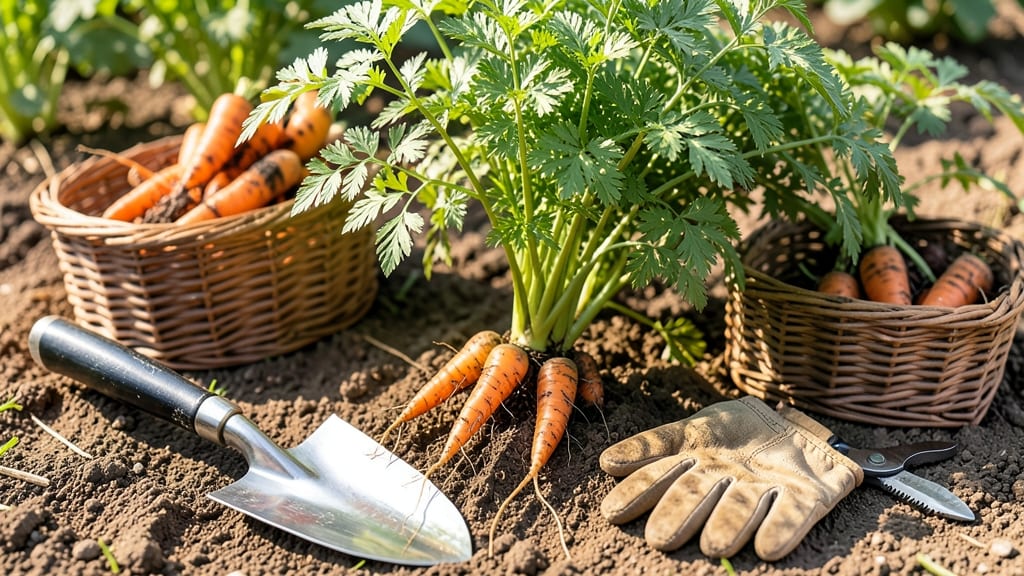
To pick carrots in your garden at the perfect moment means harvesting them when they’re sweet, tender, and fully developed—not a day too early or too late.
Picture this: you’ve been waiting weeks for those bright orange roots to pop out of the soil, only to pull one that’s either too small and puny or worse, hard and woody.
The difference between a crisp, flavorful carrot and a disappointing one often comes down to timing—and knowing the right cues can save you from that heartbreaking moment.
Most gardeners wait until the carrots reach about 3-4 inches long, but that’s just the start.
The real secret lies in checking the skin’s firmness, the leaf color, and even the soil depth—all clues that tell you whether your 🥕 are ready to be pulled or still need a little more time.
Miss these signs, and you might end up with roots that are either underdeveloped or past their prime.
In this guide, I’ll walk you through the exact steps to test for readiness, the best times of day to harvest for maximum flavor, and how to avoid common mistakes that turn great carrots into tough, inedible sticks. Let’s make sure your next harvest is nothing short of perfect.

How to test carrot maturity using the tender crunch method
Harvesting carrots at the perfect moment transforms your garden into a treasure trove of sweet, crisp roots. The Tender Crunch Method combines simple visual checks with a tactile test to ensure you never pull a carrot too early or too late.
I’ve used this method for years, and it’s saved me from both bland, underdeveloped roots and woody, tough disappointments.
Start by understanding that carrots mature in stages—leaf growth, root thickening, and skin color deepening all signal progress. The key is catching them when the shoulder (top 1 inch) is fully fleshed out but before the roots become fibrous.
This method works for all varieties, from short Paris Market types to long Danvers varieties.
I’ve found that morning harvests often yield the sweetest carrots because the sugars concentrate overnight. Avoid pulling carrots after heavy rain, as the soil becomes too loose, making roots prone to breaking or forking during extraction.
One common mistake is waiting until the leaves completely yellow or die back. By then, the roots have likely become woody and tough. Instead, harvest when the leaves are still mostly green but slowing in growth.
This is your cue that the energy is shifting from leaves to roots.
For successive planting, I recommend sowing new seeds every 2-3 weeks during the growing season. This ensures a steady supply of tender carrots rather than a single harvest of overgrown roots.
Store any unharvested carrots in the soil with straw mulch to protect them from frost until you’re ready to dig.
Pro tip: If you’re unsure, dig up one test carrot from the outer rows. This gives you a risk-free way to check maturity without committing to a full harvest. Once you master the Tender Crunch Method, you’ll never second-guess your carrot harvest timing again!
🌱🥕✂️
Optimal soil depth for harvesting carrots (and what happens if you wait too long)
Carrots are one of those vegetables where soil depth matters more than you might think. While most gardeners focus on leaf color or root size, the real secret to perfect harvests lies beneath the surface.
The ideal soil depth for most carrot varieties ranges between 3 to 4 inches—but this can vary dramatically depending on whether you're growing short-rooted varieties like Paris Market or long-rooted types like Danvers or Chantenay.
For short-rooted varieties, you can safely harvest when the roots reach 2 to 3 inches deep, while long-rooted carrots should be pulled when they hit 4 to 5 inches.
The key is to avoid letting them grow too large, as deeper soil layers often become compacted or rocky, which can cause forking or stunted growth. Digging too deep also risks disturbing neighboring plants and damaging roots that aren’t fully mature yet.
| Variety Type | Ideal Soil Depth | Harvest Size | Risk of Over-Maturation |
|---|---|---|---|
| Short-Rooted (e.g., Paris Market, Little Finger) | 2–3 inches | 1–2 inches long | Woody texture, small size |
| Medium-Rooted (e.g., Chantenay, Golden Ball) | 3–4 inches | 2–3 inches long | Fibrous, cracked roots |
| Long-Rooted (e.g., Danvers, Nantes) | 4–5 inches | 3–4 inches long | Extremely tough, bitter |
If you wait too long to harvest, carrots undergo a dramatic transformation. The first sign of over-maturation is a hard, woody texture—almost like chewing on a pencil. This happens because the plant redirects energy from root growth to seed production, thickening the root fibers.
You’ll also notice cracks forming on the surface, which are caused by uneven moisture absorption as the roots expand beyond their ideal size.
Another red flag is when the top leaves start wilting or turning yellow. This indicates the carrot has shifted its focus to flowering, meaning the root is no longer growing but instead becoming tough and stringy.
At this stage, even cooking won’t salvage the texture. The best way to avoid this is to check soil depth regularly—especially for long-rooted varieties—and harvest before the roots outgrow their space.
For container growers, this means choosing shallow-rooted varieties or using deep pots (at least 12 inches deep) to accommodate longer types. In garden beds, loosen the soil before planting to encourage straight, even growth.
The deeper the soil, the more room your carrots have to develop without hitting obstacles—but remember, depth alone doesn’t guarantee sweetness. Always pair it with the tender crunch test for foolproof results.
Pro tip: If you’re unsure about soil depth, try harvesting a few test carrots when they’re 2–3 inches long.
This gives you a baseline for when the rest of your crop will be ready, and it prevents the disappointment of pulling a rock-hard root that’s been left too long in the ground. 🥕