
Picking
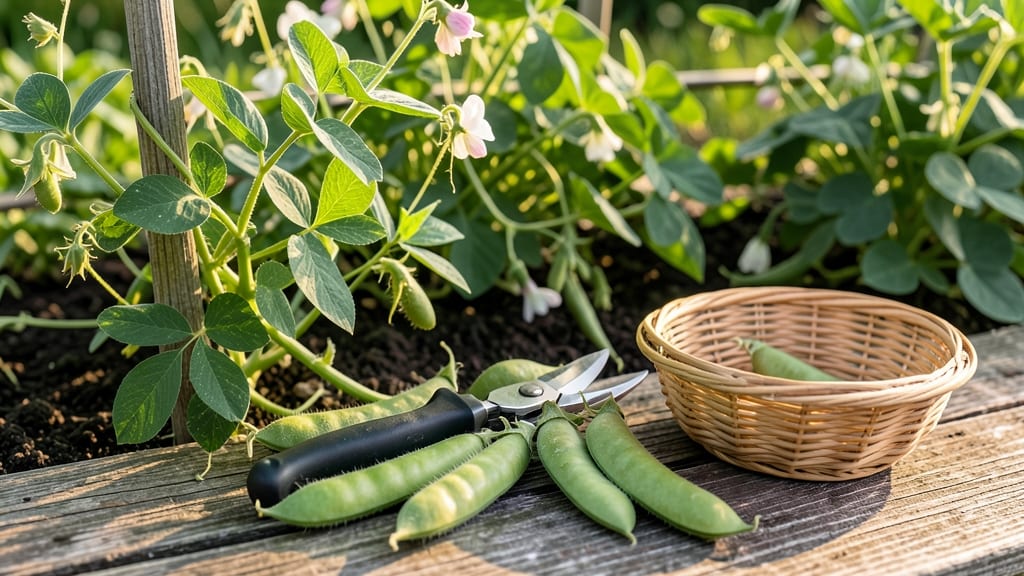
To pick peas from your garden at the perfect moment means catching them when they’re sweetest—usually 60-70 days after planting, when pods are plump but still firm.
Peas are one of the fastest-growing vegetables in your garden, but timing their harvest wrong means sacrificing sweetness for mealiness—here’s exactly when to pluck them for peak flavor.
You’ll learn how to spot the ideal size (about 2-3 inches long) and texture (smooth, bright green, and slightly taut), plus how often to harvest to keep your plants producing.
Whether you’re growing snap peas, snow peas, or shelling varieties, these cues will help you avoid bitter, overripe pods and enjoy a continuous harvest all season.

Pea pod size guide: exact measurements for harvesting sweet peas
Timing your pea harvest perfectly transforms sweet, tender pods into starchy, tough messes in seconds. The difference often comes down to pod size—a precise measurement that varies by pea type.
Whether you're growing snap peas, snow peas, or shelling peas, each variety has its own ideal window for picking. I’ve grown these for years, and I can tell you: missing this window means sacrificing flavor for fiber.
Peas mature faster than most garden vegetables, with 60-70 days from planting to harvest. But don’t let their speed fool you—overripe peas lose sweetness and develop woody textures almost instantly. The key is knowing exactly when to pluck them, measured in inches and firmness, not just days.
Here’s how to get it right every time, with exact measurements and visual cues to guide you.
📏 Pod size is your best friend when harvesting peas. For snap peas, aim for pods that are 2-2.5 inches long and bright green. These should snap cleanly when bent—if they don’t, they’re past their prime. Snow peas, on the other hand, are ready when they reach 2.5-3 inches but remain flat and tender. Overlooking these measurements means ending up with peas that are either underdeveloped or overgrown.
| Pea Type | Ideal Pod Size | Flavor Profile | Visual Cues | Harvest Window |
|---|---|---|---|---|
| Snap Peas | 2-2.5 inches | Crisp, sweet, tender | Bright green, snaps when bent | 60-65 days |
| Snow Peas | 2.5-3 inches | Crunchy, mild, flat pods | Flat, bright green, no bulge | 65-70 days |
| Shelling Peas | 2.5-3.5 inches | Sweet, buttery peas inside | Firm, slightly waxy skin | 70-80 days |
Shelling peas take the longest to mature, with pods reaching 2.5-3.5 inches before they’re ready. These are the ones you’ll hear gardeners debate the most—some swear by harvesting when the pods are firm and bright green, while others wait until they start to yellow slightly. I’ve found the sweet spot is when the pods are plump but still firm, and the peas inside are visible but not fully formed. If you wait too long, the peas inside become starchy and mealy, and the pods toughen up.
One of the biggest mistakes I see in gardens is harvesting at the wrong time of day. Peas are most flavorful when picked in the morning, after the dew has dried but before the heat of the day sets in.
Harvesting in the afternoon or evening can lead to bitter-tasting peas because the sugars convert to starches under stress. Always check your pods in the cool morning hours for the best flavor.
Flavor isn’t just about size—it’s also about texture and color. Overripe peas develop a yellowish tint and feel soft or wrinkled to the touch. Underripe peas, on the other hand, are too small and pale. The ideal pea pod should be bright green, smooth, and slightly firm.
If you’re unsure, give it a gentle squeeze: it should yield slightly but not feel mushy. This is your cue that it’s ready to pick.
Regional climates can also affect pea maturity. In cooler zones (USDA 3-5), peas may take 5-10 extra days to reach harvest size due to slower growth. Meanwhile, in warmer zones (USDA 7-10), peas might mature faster but require shade cloth to prevent bolting.
Always adjust your expectations based on your local growing conditions. For example, if you’re in Zone 9, you might need to harvest 1-2 weeks earlier than the general guidelines.
To maximize your harvest, pick peas every 2-3 days once they start maturing. This encourages the plant to produce more pods and prevents overgrowth. I’ve found that consistent harvesting can extend the pea season by 2-3 weeks.
If you miss this window, the plant will redirect its energy into seed production, and your pods will become tough and stringy. Think of it like pruning: the more you pick, the more your pea plants will reward you.
Finally, store harvested peas properly to preserve their freshness and sweetness. Place them in the refrigerator in a paper towel-lined container to absorb moisture. They’ll stay fresh for 3-5 days, but for the best flavor, use them within <
How to check pea maturity without cutting pods: non-destructive testing methods
Checking pea maturity without damaging your plants is a game-changer for maximizing your harvest. Instead of cutting pods to test ripeness, use these non-destructive methods to assess readiness. Start by gently squeezing the pods—firm pods with slight give indicate perfect sweetness, while mushy pods mean they’ve overstayed their welcome.
Look for bright green color and smooth skin. Overripe peas develop a dull, yellowish hue and wrinkled texture. Snap peas should be 2-3 inches long and crisp, while snow peas stay flat and tender. These visual cues help you avoid bitter, fibrous peas while keeping your plants productive.
🌱 Pro Tip for Pea Harvesting
Harvest peas every 2-3 days to encourage continuous production. Use a sharp pair of scissors to snip pods cleanly at the stem—this prevents damage to the plant and speeds up regrowth. Always pick in the morning when peas are coolest and sweetest.
Run your thumb along the seam of the pod. If it feels slightly fibrous but still tender, the peas are ready. Avoid pods where the seam feels hard or woody, as these are past their prime.
This tactile test is especially useful for shelling peas, where seed development is less visible.
Observe the seed visibility through the pod’s translucent skin. For snap peas, seeds should be small and barely visible, while shelling peas can have slightly larger seeds but shouldn’t fill the pod completely. Overripe peas show fully formed, dark seeds that dominate the pod’s interior.
Listen for a crisp snap when bending the pod gently. Ready-to-pick peas emit a clean break, while unripe pods feel rubbery and bend without snapping. This acoustic cue works best with snap peas and helps you distinguish between tender and tough pods without harming the plant.
Use these methods to extend your harvest window by 1-2 weeks. Regular checks prevent overgrowth, ensuring your pea plants stay productive. Combine touch, sight, and sound for the most accurate assessments—your taste buds (and plants) will thank you!