
Picking
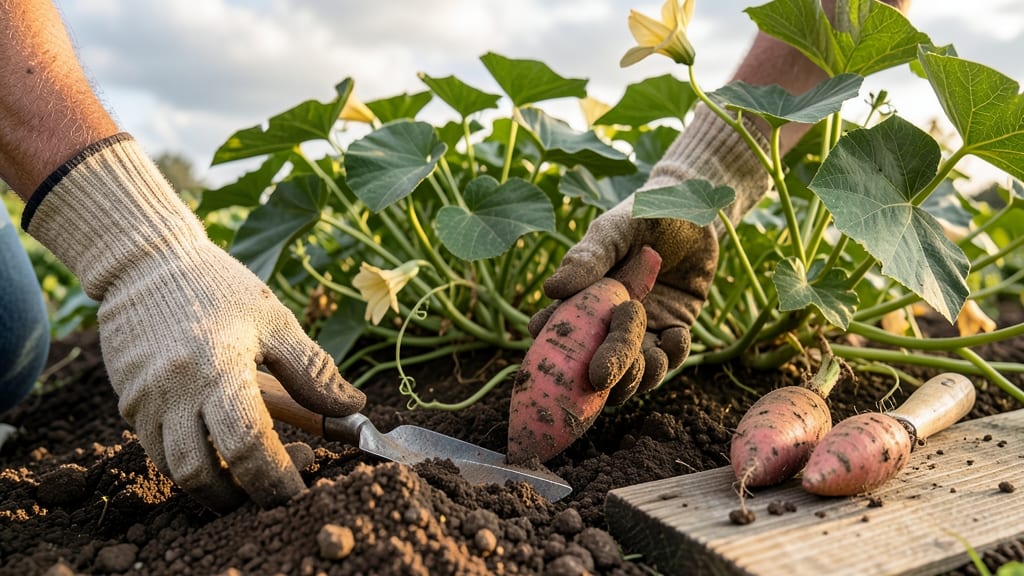
To pick sweet potatoes from the garden at the perfect time, watch for 90 to 140 days of growth and these key visual cues: yellowing vines, tough skin, and tubers the size of a baseball.
Sweet potatoes left too long in the ground turn starchy and lose their sweet flavor—or worse, rot—but harvesting them too early means small, underdeveloped tubers. Timing is everything, and these visual cues will help you know exactly when to dig up your crop for maximum sweetness and yield.
You’ll need to master the skin slip test, spot the difference between healthy yellowing and frost damage, and know when to ignore the calendar in favor of the plant’s signals. I’ll walk you through each step, including how to handle regional differences like shorter growing seasons in cooler climates.
By the end, you’ll never guess again—just harvest with confidence, cure your potatoes properly, and enjoy a bounty that tastes as good as it looks.

How to use the skin slip test for perfect sweet potato harvest timing
The skin slip test is the most reliable way to determine when your sweet potatoes are perfectly ripe for harvest.
Unlike other vegetables, sweet potatoes don’t have a single "best-by" date—they mature over time, and this simple test helps you avoid both underripe tubers (too small) and overripe tubers (woody or rotten).
The test works by checking how easily the skin peels away from the tuber, which changes as the potato matures.
Why does this test matter? Immature sweet potatoes (harvested too early) lack sweetness and have thin, tender skin. Meanwhile, overripe tubers become tough, fibrous, and prone to cracking or spoilage.
The skin slip test gives you a visual cue to pull them at the peak of sweetness, typically when they’ve reached 3-6 inches in length and developed a thick, glossy skin.
Before you begin, gather these tools: a sharp knife or garden fork, a glove (sweet potato skin can stain), and a sunny day for testing. Work gently to avoid damaging the tubers—you’ll want to harvest them whole for the best storage life.
The test itself takes just a few minutes and can save you from wasting an entire crop!
Here’s how to perform the test correctly, with clear visual cues for each maturity stage:
Step-by-Step Skin Slip Test
- 1 Select a tuber near the plant’s base where vines meet the soil. Avoid small tubers—they’re likely underripe.
- 2 Gently grasp the tuber with both hands. Use your thumb and index finger to pinch the skin firmly.
- 3 Slide your fingers upward along the skin. Watch how it resists or slips from the tuber’s body.
-
4
Interpret the slip:
- No slip = Too early (skin clings tightly; tubers are small and underdeveloped).
- Easy slip (1-2 inches) = Perfectly ripe (skin peels back smoothly; ideal for eating fresh).
- Full slip (entire length) = Overripe (skin peels off easily; tubers may be woody or cracking).
- 5 Harvest immediately if you see the easy slip stage. Use a garden fork to loosen soil and lift tubers gently to avoid bruising.
Timing is critical because sweet potatoes continue to mature after vine death. If you miss the easy slip window, the tubers will become less sweet and more fibrous.
For example, in Zone 6a, I’ve seen tubers go from perfectly sweet to woody in just 1-2 weeks if left unharvested. Always prioritize the skin slip test over vine color alone—some varieties (like Beauregard) keep green vines longer than others.
What if your tubers feel too firm during the test? This could mean they’re underwatered or planted in sandy soil. Sweet potatoes need consistent moisture (1-2 inches per week) to develop properly.
If the skin is too soft, they may be overwatered or rotting. In either case, dig up a few tubers to inspect—they should feel firm but yielding, like a ripe avocado.
After harvesting, let tubers cure in warm conditions (80-85°F with high humidity) for 5-10 days to develop their sweet flavor. This step is non-negotiable—skipping it means bland, starchy potatoes. Place them in a well-ventilated box or mesh bag, away from direct sunlight, to prevent spoilage.
Remember: The skin slip test is your best friend for sweet potato harvesting. It’s faster than waiting for vines to die back and more accurate than guessing by days after planting. Once you master this method, you’ll never again wonder, "Are my sweet potatoes ready?"—you’ll just know.
Vine yellowing and other visual clues that signal harvest time
Sweet potato vines send clear signals when it's time to harvest, and vine yellowing is the most obvious one. Unlike frost damage, which causes sudden browning, healthy yellowing happens gradually as the plant matures.
Look for leaves turning from dark green to a golden yellow, starting at the edges and moving inward—this means your tubers are nearing peak sweetness.
Another key visual cue is leaf drop. When about 50% of the foliage has fallen naturally, your sweet potatoes are likely ready. This process, called senescence, happens when the plant redirects energy to the tubers.
If leaves are still mostly green, wait a week or two before checking again.
Don't ignore soil conditions either. Before harvest, the soil should be dry to the touch about an inch below the surface. This helps prevent skin damage during digging. If your region faces early frost, prioritize harvesting when nighttime temperatures drop below 50°F (10°C), as cold soil can cause rot.
| Indicator | Ideal Harvest Signal | Poor Harvest Signal |
|---|---|---|
| Vine Color | Golden yellow | Brown or black spots |
| Leaf Drop | 50% fallen naturally | Sudden wilting |
| Skin Feel | Firm, resists pressure | Soft or peeling |
| Tuber Size | 3-6 inches long | Smaller than 2 inches |
| Soil Condition | Dry 1" below surface | Wet or muddy |
In cooler climates, watch for frost warnings—sweet potatoes can't tolerate freezing, even if the tubers themselves are hardy. If frost is predicted within 2 weeks, harvest immediately, even if the vines aren't fully yellow.
For warm climates, extend your harvest window by checking tubers every 10-14 days after the vines yellow.
One final trick: gently brush away soil from a few tubers to check size. If they're baseball-sized (3-6 inches), they're ready. Smaller ones need more time, while larger ones may have lost sweetness. Remember, sweet potatoes store better when harvested at full maturity, so don't rush the process.
Pro tip: Harvest on a dry, sunny day to let the soil dry slightly before digging. This prevents skin damage and makes curing easier. Once you've pulled your sweet potatoes, let them sit in the sun for a few hours to toughen their skins before storing.