
Picking
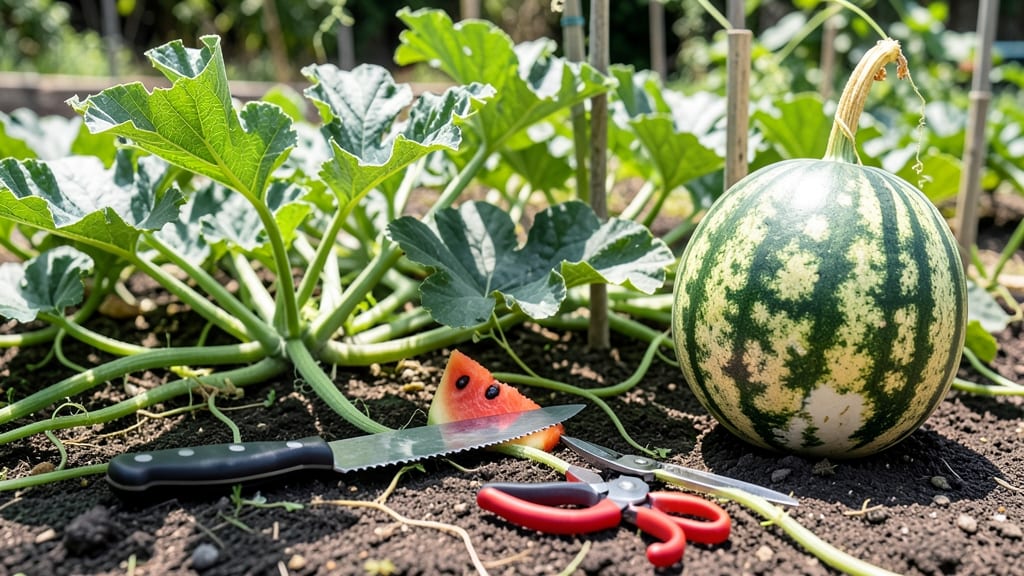
To pick watermelon from your garden at the perfect moment means the difference between a juicy, sweet slice and a mealy disappointment.
Nothing beats the sweet victory of harvesting your own homegrown watermelon—except maybe the disappointment of picking it too early. Timing is everything, and missing the perfect window means mealy flesh instead of juicy perfection.
Here’s the secret: look for a cream-colored belly, a dull thump when tapped, and a vine that’s drying up. These clues, paired with the right temperature and days since pollination, are your shortcut to peak ripeness every time.
In this guide, I’ll walk you through the visual cues, the thump test, and the best time of day to harvest—so you can enjoy that first bite of summer sweetness without the guesswork.

Watermelon ripeness signs: visual & physical clues to harvest at peak sweetness
Harvesting a perfectly ripe watermelon is like finding buried treasure—you know it’s there, but spotting the exact moment takes skill. The key lies in combining visual cues, physical tests, and even subtle scent changes.
Ignore just one clue, and you might end up with a melon that’s either rock-hard or mushy. Let’s break down the unmistakable signs your watermelon is ready to pick.
First, focus on the underside of the melon. A ripe watermelon will show a cream-colored spot where it rested on the ground. This "field spot" indicates the melon absorbed sunlight evenly, a critical sign of ripeness.
If this spot is still white or pale, the melon needs more time. Pair this with the stem end, which should turn from green to yellow or brown when fully ripe.
Don’t overlook the tendril nearest the fruit. This small vine will dry out and turn brown when the watermelon is ready to harvest. If it’s still green and plump, the melon isn’t there yet.
Pro tip: Check this tendril daily during peak ripening season—it’s one of the most reliable indicators. Skipping this step could mean missing your window by just a few days.
The rind color also shifts as watermelons mature. While varieties like Sugar Baby stay pale green, others like Crimson Sweet develop deep, consistent hues. Press your thumbnail into the rind—if it doesn’t leave a dent, the melon is firm and ripe.
A soft spot means it’s overripe or underripe. This test is quick and requires no tools, making it perfect for busy gardeners.
Now, let’s talk sound and scent. Give the melon a gentle tap—if it sounds hollow or "rattles" when shaken, the seeds are mature and the flesh is sweet. A dull thud suggests it’s still too firm.
Additionally, ripe watermelons emit a sweet, musky aroma near the stem. If you catch a whiff of this scent, your melon is likely ready. Trust your nose—it’s often the most honest indicator!
| Ripeness Sign | What to Look For | Action |
|---|---|---|
| Field Spot | Cream-colored patch on underside | Check for even coloration |
| Stem End | Yellow or brown, dried out | Harvest when fully dried |
| Tendril Near Fruit | Brown and crispy | Pick when fully browned |
| Rind Color | Deep, consistent hue (varies by variety) | Press thumbnail—no dent = ripe |
| Sound Test | Hollow "rattle" when tapped | Pick if seeds sound mature |
| Scent | Sweet, musky aroma near stem | Harvest when scent is strong |
Timing matters, especially for heirloom varieties or those grown in hot climates. Watermelons typically reach ripeness 75-90 days after planting, but this varies. If your melons are on the vine longer than expected, monitor them closely—overripe watermelons develop a fermented smell and soft spots.
The goal is to harvest when the melon is at its peak sweetness and firmness, not a day later.
One common mistake is relying on size alone. A watermelon can grow large but still be underripe. Always cross-reference multiple ripeness signs before picking. For example, a melon might be big but lack the cream-colored field spot or hollow sound.
Patience pays off—waiting an extra day or two for all signs to align ensures a juicy, flavorful harvest every time.
Finally, consider the weather conditions in your region. In hot, dry climates, watermelons ripen faster and may need harvesting earlier. Conversely, in cooler or rainy seasons, they take longer. Keep a garden journal to track ripening patterns year after year.
This way, you’ll anticipate the perfect harvest window like a pro. With these clues in hand, you’ll never miss the sweetest moment again!
Pro tip: Use a sharp knife or pruners to cut the melon from the vine, leaving a 1-inch stem. This prevents rot and makes storage easier. Now, grab your melon and get ready to enjoy the fruits of your labor—literally! 🍉
The thump test demystified: how to use sound & weight for watermelon ripeness
When you're standing in your garden staring at a watermelon wondering if it's ready, the thump test becomes your best friend. This classic trick involves tapping the melon and listening for a hollow sound—but there's more to it than just a quick knock.
The test actually combines sound, weight, and even visual cues to confirm ripeness.
First, let me clarify: the thump test isn't foolproof. Some watermelons pass it early while others fail it even when fully ripe. That's why I recommend using it alongside other ripeness indicators like rind color and tendril changes.
Together, they create a more accurate picture of when your watermelon is truly ready to pick.
⚠️ callout warning ⚠️
Don't rely solely on the thump test—especially for smaller varieties or melons grown in shady conditions. These can produce dull thumps even when ripe. Always check the cream-colored belly and dry stem first. For overripe melons, the skin may feel soft and the thump will sound flat instead of hollow.
The proper way to perform the thump test is to gently tap the melon's blossom end (the side that faced the vine) with your knuckles. A ripe watermelon should produce a deep, hollow sound, almost like a drum, while an unripe one will sound more dull or flat. This hollow sound indicates that the seeds are mature and the flesh is sweet.
Weight also plays a crucial role. A ripe watermelon should feel heavy for its size. Lift it gently—if it feels light, it's likely not ready. This is because water content increases as the melon ripens. For example, a 10-pound watermelon should feel solid and substantial, not hollow or lightweight.
If your watermelon fails the thump test but shows other signs of ripeness like a cream-colored belly and dry tendrils, don't panic. Some varieties, like sugar babies or yellow watermelons, may never give a satisfying thump.
In these cases, cut it open to check the seed color—ripe seeds should be deep brown and the flesh should be bright red or orange.
For extra accuracy, combine the thump test with the finger nail test. Press your thumbnail into the rind near the blossom end. If it springs back, the melon is ripe; if it leaves a dent, it's not ready.
This simple trick works especially well for smaller varieties where the thump test can be unreliable.
Remember, the thump test is just one tool in your watermelon harvesting toolkit. Pair it with visual cues, tendril changes, and even the field spot test (looking for a yellow patch where the melon rested on the ground) for the most accurate results.
With practice, you'll develop a keen eye—and ear—for knowing exactly when to pick your watermelon for that perfect sweetness.