
Tools
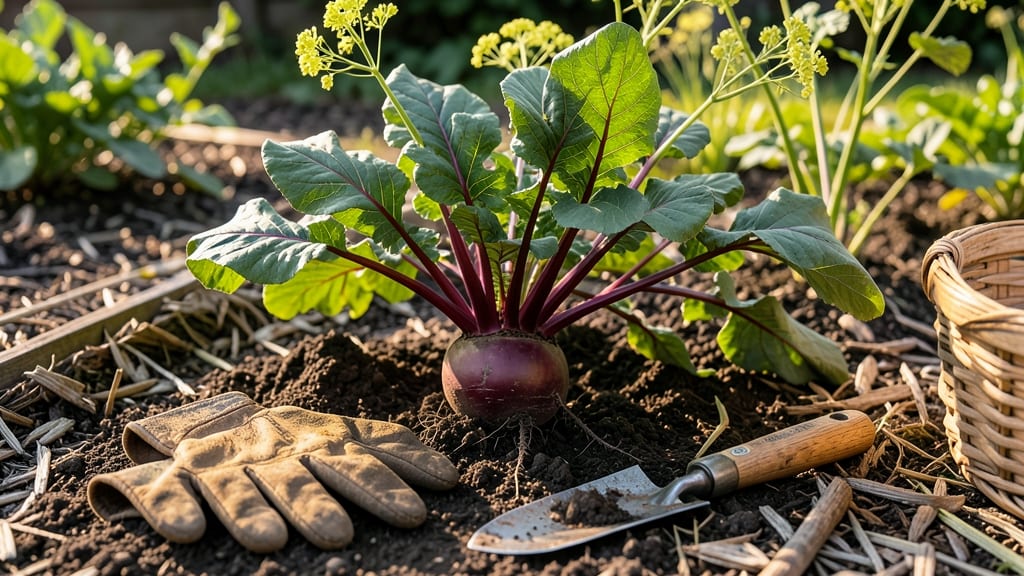
Pull beets from the garden when they reach 1 to 2 inches in diameter for tender, sweet roots with the best flavor. Larger beets (2.5+ inches) store longer but may become woody. Harvest young greens separately for continuous harvests.
Timing your beet harvest depends on whether you prioritize flavor or storage. 🌱 Young beets—between 1 to 2 inches—develop peak sweetness and delicate textures, making them ideal for quick cooking.
The longer they stay in the ground, the more fibrous they become, which is why many gardeners prefer harvesting them small. For storage varieties, you can wait until they reach 2.5+ inches, but be prepared for a slightly tougher bite.
Pro tip: Check the soil around the base—if you see new roots forming, it's time to pull them!
Another key factor is the beet variety. Baby beets, like 'Detroit Dark Red,' mature quickly and are best harvested small, while storage types like 'Chioggia' can handle a longer growing season.
Always harvest greens first—they thrive when cut young, allowing the roots to focus on growth. This two-step approach ensures you get both tender roots and continuous greens throughout the season.
💡 In This Article
- Beet Root Size and Maturity Stages Explained
- Optimal Harvest Timing for Beet Varieties
Beet root size and maturity stages explained
Beet roots develop through distinct growth phases where size directly impacts their internal chemistry. When beets are young (1 inch diameter), their cells contain higher moisture content (around 85-90%) and lower fiber concentrations, creating that signature tender, almost buttery texture when cooked.
The key flavor compounds—natural sugars like sucrose and fructose—peak during this stage because the plant hasn't yet diverted energy into thickening cell walls for storage.
As beets mature beyond 2 inches, their cellular structure changes dramatically. The plant begins producing more lignin, a rigid polymer that strengthens cell walls and creates that woody texture we associate with overgrown beets.
This process also reduces moisture content to 80-85%, concentrating sugars but making the flesh denser.
The skin thickens too, often requiring peeling before use—a clear sign the beet has passed its prime for fresh eating. 🌱 What's fascinating is how this transformation mirrors fruit ripening, where sweetness increases initially but is eventually overshadowed by structural changes.
Storage potential becomes the trade-off when growing larger beets. Varieties bred for long-term storage (like 'Boltardy') develop thicker skins and deeper red pigments containing anthocyanins, which act as natural preservatives.
These compounds increase as beets mature, giving them their characteristic deep color and extended shelf life—but at the cost of that initial delicate texture. The sweetness peak actually occurs slightly before maximum size, which is why many chefs prefer 1.5-2 inch beets for gourmet dishes.
Temperature plays a hidden role in this maturation process. Cooler soil temperatures (55-65°F) slow down growth, allowing beets to develop more complex flavors without becoming fibrous. In warmer conditions (>75°F), beets grow faster but may bolt prematurely, sending energy to seed production rather than root development.
This is why spring and fall plantings often yield sweeter, more tender beets than summer crops in hot climates.
Here's what to watch for when checking maturity: The shoulder of the beet (where it widens) should be smooth and firm to the touch. If you see cracks or the skin developing a rough texture, the beet has likely passed its ideal window.
The greens also provide clues—young leaves are tender and bright, while mature leaves develop thicker stems and may start flowering, signaling it's time to harvest the roots. 💫
For maximum flavor, aim to harvest when beets reach 70-80% of their final predicted size—this gives you that perfect balance between sweetness and tenderness. The exact timing varies by variety, but most gardeners find the sweet spot occurs when beets have been growing for 50-60 days after sowing.