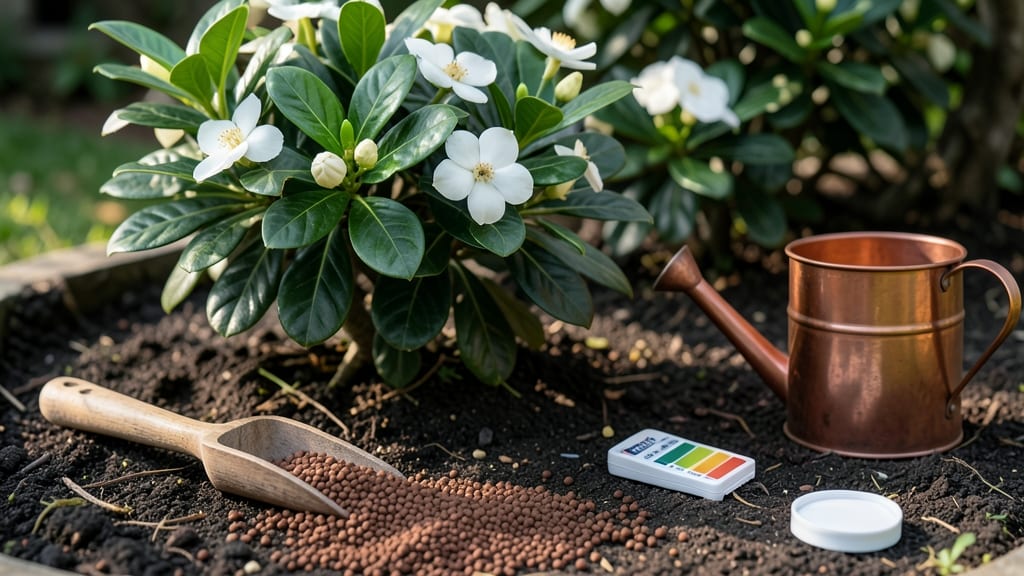
Fertilizing gardenias in Florida triggers their famous fragrance and blooms—but the timing must match the state’s year-round growing season or you’ll end up with weak plants and sparse flowers.
Picture this: You’ve spent months nurturing your 🌸 gardenias, only to watch them produce half the blooms you expected. The culprit? Fertilizing at the wrong time, when the plant is already stressed by heat or drought. Florida’s climate means gardenias grow almost constantly, so a one-size-fits-all approach won’t work.
In this guide, I’ll break down the exact months to fertilize—from the pre-bloom boost in spring to the light feeding in summer—and how to adjust for Florida’s humidity and sandy soil.
You’ll learn which fertilizers work best, how to spot over- or under-feeding, and the simple tricks to keep your gardenias thriving all year.
By the end, you’ll have a custom schedule that turns your gardenias into the fragrant, blooming powerhouses they’re meant to be—without the guesswork.
✨
⭐
✨

🌸
Gardenia Fertilizer Guide
📅
Best Time
Early morning after watering
🧪
NPK Ratio
6-6-6 or 8-3-9 (acid-loving plant formula) (Slow-release, acid-based granular or liquid fertilizer)
📏
Amount
1 tbsp per plant (granular) or 1 cup per 10 sqft (liquid)
Florida gardenia fertilizer schedule by month: bloom-triggering timeline
Timing your gardenia fertilizer in Florida isn’t just about feeding your plants—it’s about syncing with their natural blooming cycles. Since Florida spans USDA zones 9a-11, your schedule should adapt slightly between North Florida’s cooler winters and Central/South Florida’s warm year-round climate.
The key? Fertilizing when your gardenias are primed to grow, not when they’re dormant or stressed.
For year-round blooms, focus on spring and early fall feeding to trigger flower buds. In North Florida, winter slows growth, so skip fertilization entirely during December-February. Meanwhile, Central/South Florida gardenias can handle lighter feeding in winter if temperatures stay above 50°F.
Always use an acid-loving plant fertilizer (like a citrus blend) to mimic their native soil conditions.
Here’s how to align your fertilizer applications with Florida’s climate zones and your gardenia’s growth stages:
| Month |
North Florida (Zones 9a-9b) |
Central/South Florida (Zones 10a-11) |
Fertilizer Type |
Notes |
| January |
Skip |
Light feed (if >50°F) |
Slow-release granules |
Dormant in North; minimal growth in South. |
| February |
Skip |
Light feed |
Fish emulsion (diluted) |
Prep for spring blooms; avoid heavy feeding. |
| March |
Feed |
Feed |
6-6-6 or 8-3-9 |
Boost for spring blooms; water after applying. |
| April |
Feed |
Feed |
Slow-release pellets |
Peak growth phase; feed every 4-6 weeks. |
| May |
Feed |
Feed |
Liquid acid fertilizer |
Support summer blooms; avoid synthetic fertilizers. |
| June |
Light feed |
Light feed |
Compost tea |
Reduce feeding; focus on watering and mulching. |
| July |
Light feed |
Light feed |
Bone meal |
High heat; use organic options to avoid burn. |
Signs your gardenias need fertilizer (and when to adjust your schedule)
Your gardenias might be silently screaming for nutrients even when they look healthy. Yellowing leaves, sparse blooms, or slow growth are classic signs your Florida shrubs need a fertilizer boost.
Since gardenias thrive in acidic soil (pH 5.0-6.0), Florida’s sandy, alkaline soils often starve them of essential nutrients like nitrogen, phosphorus, and iron.
Don’t wait until your plants show severe deficiencies—adjust your fertilization schedule now. Florida’s humid climate and frequent rains can wash away nutrients faster than you think. A well-timed feeding in early spring or fall can prevent these issues entirely.
⚠️ Warning: Over-Fertilizing in Florida’s Heat
Florida’s summer heat and high humidity make gardenias extra sensitive to fertilizer burn. If you notice crispy leaf edges or brown spots after feeding, you’re overdoing it. Reduce fertilizer to half-strength in June-August, and always water thoroughly before applying fertilizer to dilute salts.
Start by checking your leaf color—healthy gardenia leaves are deep green and glossy. Yellow leaves (especially between veins) signal iron deficiency, while purple stems mean phosphorus starvation. For bloom-heavy varieties, poor flowering often points to low phosphorus—the "P" in NPK ratios.
Adjust your schedule by feeding every 4-6 weeks during active growth (spring-fall). Skip winter fertilization entirely—gardenias rest then. For container-grown plants, flush the soil with water after feeding to prevent salt buildup in Florida’s dry periods.
Pro tip: Use a slow-release acid fertilizer (like 6-6-6 or 8-3-9) and apply it early morning after watering. This mimics Florida’s natural rainy season, giving roots time to absorb nutrients before the afternoon heat sets in.
If your gardenias still struggle, test your soil pH—aim for 5.0-6.0. Florida’s alkaline soils often need sulfur amendments or peat moss to create the ideal acidic environment. A simple soil test kit (available at garden centers) will save you from guessing.
★★★★★4.6(6 reviews)