Picking
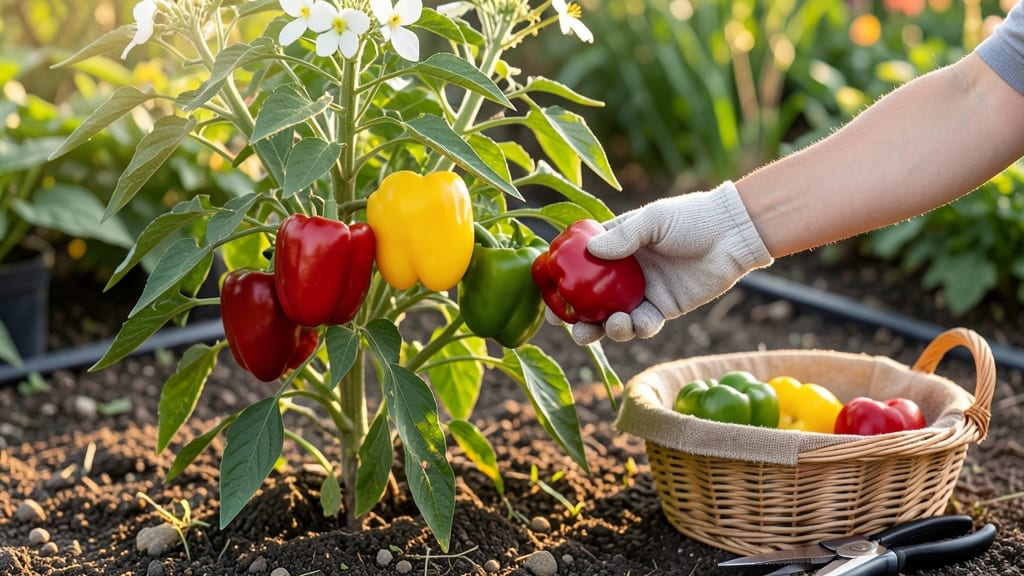
To pick bell peppers from your garden at their sweetest, watch for deep color and firmness—these are the two clues that tell you the moment is right.
Picture this: you’ve nurtured your 🌶️ plants all season, and now the question is when to harvest before they lose their flavor. Pick too soon, and you’ll miss out on peak sweetness; wait too long, and they’ll turn mealy or bitter.
The good news? A simple color-stage guide makes this easy—even for beginners.
Green peppers are fine to harvest early, but their real flavor potential unlocks when they ripen to yellow, orange, or red. In Zone 6a, that window typically opens in late July, but heatwaves or cooler summers can shift it.
Below, I’ll break down the exact visual cues to look for, plus how to adjust for your local climate.
You’ll learn how to test for ripeness with just your thumb, the best time of day to harvest for maximum shelf life, and even how to coax extra flavor from peppers that ripen late. Ready to turn your garden into a flavor factory?

Bell pepper color stages: when to harvest for maximum sweetness
Bell peppers transform from green to vibrant red, yellow, or orange as they ripen, each stage offering a unique flavor profile. The green stage is the least sweet but still edible, while mature colors deliver peak sweetness and nutritional benefits.
Understanding these stages helps you harvest at the perfect moment for the best taste and texture.
Timing your harvest is crucial because overripe peppers lose sweetness and develop a waxy, bitter taste. Conversely, picking too early means sacrificing the richer flavor and higher vitamin C content that comes with full maturity.
Let’s break down each color stage, including when to harvest and what to expect from each.
🌱 Key Takeaway: Harvesting at the right stage ensures maximum sweetness, crisp texture, and nutritional value—don’t miss these visual and tactile cues!
| Color Stage | Harvest Timeframe | Flavor Profile | Texture | Nutritional Peak |
|---|---|---|---|---|
| Green | 60–75 days after transplanting | Mild, slightly grassy, least sweet | Firm, crisp | Lower vitamin C, higher water content |
| Yellow | 75–85 days after transplanting | Sweet, slightly tangy, floral notes | Slightly softer than green | Moderate vitamin C, higher sugar content |
| Orange | 80–90 days after transplanting | Sweet, caramel-like, intense flavor | Tender, slightly waxy | High vitamin C, antioxidant-rich |
| Red | 85–95 days after transplanting | Sweetest, fruity, deep flavor | Softer, slightly leathery | Peak vitamin C, highest nutritional value |
The green stage is often harvested first, especially in commercial settings, but home gardeners can wait for full color to enjoy the best flavor. If you’re growing sweet bell peppers, aim for yellow, orange, or red stages—they’re significantly sweeter and more aromatic than green peppers.
For example, a red bell pepper can have three times the vitamin C of a green one!
To test ripeness, gently press the pepper. If it feels firm but slightly yielding, it’s ready. A hard pepper is underripe, while a soft or wrinkled one is overripe.
Also, check the stem end: it should turn yellow or brown as the pepper matures, signaling it’s time to harvest.
Pro Tip: If your peppers aren’t changing color, they might need more sunlight or warmer temperatures. Bell peppers thrive in full sun (6–8 hours daily) and warm soil (70–85°F). If your climate is cooler, consider using black plastic mulch to absorb heat and speed up ripening.
Harvesting at the right stage isn’t just about taste—it’s also about encouraging more production. When you pick a pepper, the plant redirects energy to produce new flowers and fruits.
So, the more you harvest, the more peppers you’ll get! Just be sure to use clean pruners or scissors to avoid damaging the plant.
One common mistake is waiting too long for peppers to turn red, especially in cooler climates. If the weather turns chilly before peppers ripen, harvest them at their current stage—they’ll still be delicious, just less sweet.
You can also pick green peppers early and let them ripen indoors on a sunny windowsill.
For maximum sweetness, focus on red or orange peppers—they’re the stars of the flavor show. But if you love the crispness of green peppers, harvest them when they’re 3–4 inches long and glossy.
Just remember: the longer you wait, the sweeter they get, but don’t let them overstay their welcome on the vine!
🌶️ Final Harvest Checklist: ☑️ Color: Deep, consistent hue (no patches) ☑️ Firmness: Yields slightly to gentle pressure ☑️ Size: Reached full variety size (check seed packet) ☑️ Stem: Snaps cleanly or turns yellow/brown
Signs of overripe bell peppers: how to avoid bitter or spoiled harvests
Overripe bell peppers can turn your garden’s hard work into a bitter disappointment. Unlike perfectly ripe peppers, which burst with sweetness and crisp texture, overripe ones develop a leathery, rubbery consistency and a sharp, unpleasant flavor.
The key to avoiding this is recognizing the subtle but critical visual and tactile cues that signal it’s time to harvest—or that you’ve waited too long.
One of the first signs of overripeness is a wrinkled or dull skin. Fresh peppers have a glossy, firm surface, but as they age, their skin loses its sheen and develops fine creases.
Another red flag is a hollow stem—when you gently twist the pepper at its base, it should snap cleanly, but overripe peppers often have a dry, brittle stem that pulls away easily, leaving a hollow cavity inside.
Color changes also play a crucial role. While perfectly ripe peppers develop deep, vibrant hues (green, yellow, orange, or red), overripe peppers often fade to muted tones or even darken unnaturally.
For example, a red bell pepper might turn a dull maroon, while a yellow one could develop brownish spots. These color shifts are your garden’s way of warning you that the pepper’s sugars have broken down into starches, reducing sweetness and increasing bitterness.
⚠️ When to Pick Bell Peppers to Avoid Overripeness
✅ Harvest when: Peppers are firm to the touch, glossy and vibrant, and the stem snaps cleanly with a slight twist. For green peppers, aim for 3-4 inches long and a deep green color. For colored varieties, wait until the hue is uniform and bright.
❌ Avoid picking when: Skin is wrinkled or dull, the stem feels brittle or hollow, or the pepper has soft spots. These are classic signs of overripeness and should be composted immediately.
💡 Pro Tip: Check peppers every 2-3 days during peak season (July-August) to catch them at the perfect moment. Morning harvests prevent overnight moisture loss, keeping peppers fresher longer.
Climate and variety also influence ripening speed. In hot, dry climates, peppers may ripen faster and become overripe more quickly, while cool, cloudy weather can slow ripening, leading to peppers that stay green or underdeveloped.
If you’re growing heirloom varieties, these often take longer to mature than hybrids, so keep an eye on their specific ripening timelines. For example, a ‘Jalapeño’ might be ready in 70-80 days, while a ‘Bell Boy’ could take 90 days or more.
To troubleshoot delayed ripening, ensure your plants receive full sun (6+ hours daily) and consistent watering. Overwatering or uneven moisture can stress plants, slowing fruit development.
If peppers aren’t ripening by late summer, consider using a black plastic mulch to absorb heat or providing afternoon shade in extreme heat to prevent stress. For premature ripening, harvest green peppers and encourage new fruit growth by pruning excess foliage.
Once you’ve mastered the art of spotting the perfect pepper, you’ll never settle for anything less than a crisp, sweet harvest. Keep a small notebook by your garden to log when peppers reach ideal ripeness—this helps you predict future harvests and adjust your gardening strategy for next season.
With practice, you’ll develop an almost instinctive sense for the exact moment to pick, turning your garden into a flavor factory.