
Planting
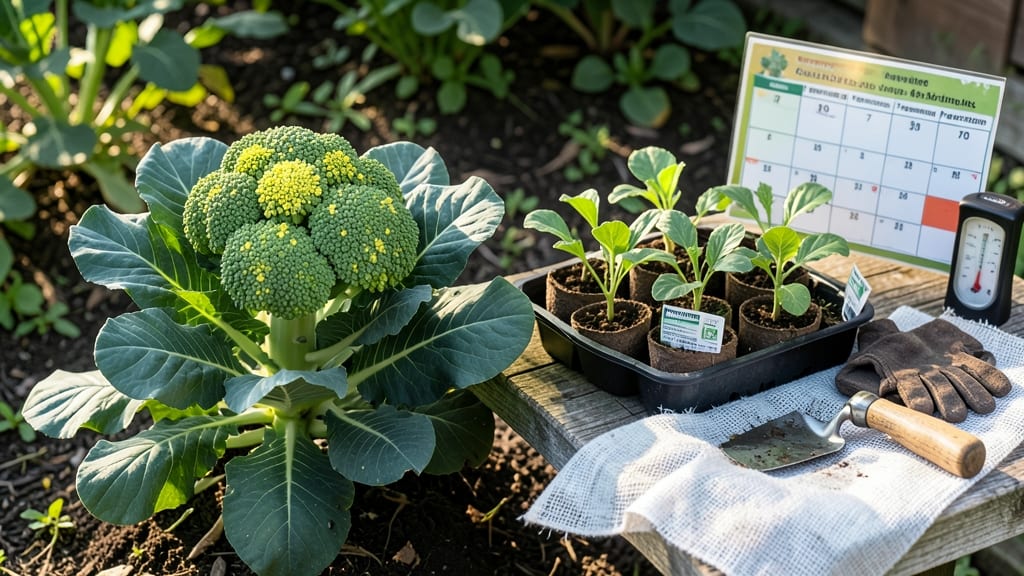
Planting a vegetable garden in Northern California depends on your exact microclimate—whether you’re in the foggy Bay Area or the hot Sacramento Valley—because the wrong timing can mean the difference between a thriving harvest and a wasted season.
Northern California’s diverse microclimates—from foggy coastal valleys to hot inland regions—can make planting your vegetable garden feel like a high-stakes guessing game. Get the wrong timing, and your lettuce bolts before harvest or your tomatoes struggle in the heat.
But here’s the good news: once you know your local frost dates and heat thresholds, you can time your plantings like a pro.
For example, coastal areas like San Francisco can start cool-season crops like broccoli as early as late February, while inland valleys should wait until mid-March to avoid frost damage.
In this guide, I’ll break down the ideal planting windows for your specific zone—whether you’re in Zone 7a’s foothills or Zone 9b’s coastal belt—plus how to adjust for heat, soil, and even succession planting for year-round harvests.
Northern California planting calendar by microclimate: coastal vs. valley vs. foothills
Northern California’s microclimates create wildly different growing conditions—coastal areas like Zone 9b (San Francisco) stay mild year-round, while inland valleys (Zone 8a, Sacramento) bake in summer and foothills (Zone 7a, Napa) face earlier frosts.
These differences mean your planting windows must shift dramatically to avoid bolting lettuce or heat-stressed tomatoes. Let’s break down the exact start dates for your location.
Coastal regions enjoy longer growing seasons thanks to ocean breezes, while inland valleys experience hotter summers that demand heat-tolerant varieties. The foothills? They’re the most unpredictable, with earlier frosts and cooler nights.
Understanding these patterns lets you time your plantings for maximum success—whether you’re growing cool-season greens or warm-season tomatoes.
| Microclimate | Last Frost Date | Cool-Season Plants (Lettuce, Broccoli) | Warm-Season Plants (Tomatoes, Peppers) | Heat Threshold (°F) |
|---|---|---|---|---|
| Coastal (Zone 9b) | Feb 15 - Mar 1 | Sep 15 - Oct 15 | Apr 1 - May 15 | 85°F (choose heat-tolerant varieties) |
| Inland Valley (Zone 8a) | Mar 1 - Mar 15 | Oct 1 - Nov 1 | May 1 - Jun 1 | 90°F (use shade cloth for peak summer) |
| Foothills (Zone 7a) | Apr 1 - Apr 15 | Oct 15 - Nov 15 | Jun 1 - Jun 15 | 80°F (extend season with row covers) |
For cool-season crops like lettuce, kale, and broccoli, coastal gardeners can start as early as September 15, while foothill growers must wait until October 15 to avoid frost damage.
The key is planting 6-8 weeks before your first expected frost—coastal areas get a 2-month extension compared to inland zones. I’ve learned this the hard way: planting spinach in early October in the foothills? It freezes solid by November.
Warm-season plants like tomatoes, peppers, and eggplants thrive when soil temperatures hit 60°F. Inland valleys can start as early as May 1, but coastal areas should wait until April 1 to avoid soilborne diseases from lingering cool, damp conditions.
The biggest mistake I see? Planting tomatoes too early in the foothills—by June, the heat stress causes blossom drop, and you’re left with no fruit.
Heat tolerance varies by variety. In Zone 8a valleys, opt for heat-tolerant tomatoes like ‘Solar Fire’ or ‘Heatmaster’ peppers, which handle 90°F+ temperatures without wilting. Coastal gardeners can grow standard varieties, but even there, afternoon temps can creep into the mid-80s during heatwaves.
I’ve had cherry tomatoes split open in San Francisco’s unexpected July heat—always a sad sight.
Succession planting is your secret weapon. In coastal areas, you can squeeze in two lettuce crops (fall and spring) with minimal risk, while inland gardeners might only get one fall crop before frost.
For peppers, I plant a second batch in early July in the valley to extend harvests into September, but I’d never try that in the foothills—the nights get too chilly.
Don’t forget about soil prep. Coastal soils stay moist longer, so I add compost to improve drainage, while inland gardeners need to mulch heavily to retain moisture. The foothills? A mix of both—amend with organic matter and use row covers to protect young plants from late frosts.
My broccoli once bolted in the foothills because I skipped the row cover—never again!
Use these microclimate guidelines as your baseline, but always check your local frost date averages (the USDA maps are a great start). I cross-reference with weather.com for my specific town—it’s saved my basil more than once from a surprise cold snap.
With the right timing, you’ll turn Northern California’s quirks into your garden’s superpower.
Pro tip: Keep a planting journal to track what works in your microclimate. Last year, my zucchini thrived in the valley but struggled in my coastal garden—turns out, it needed more heat than the fog could handle.
Adjust, experiment, and soon you’ll have a year-round harvest tailored just for you. 🌱
How to adjust planting times for your specific Northern California location
Northern California’s microclimates can shift planting windows by weeks—even miles apart. In San Francisco, coastal fog keeps nights 10°F colder than Sacramento, while inland areas hit 90°F+ afternoons by June.
To avoid bolt-prone lettuce or heat-stressed tomatoes, you’ll need to tweak your schedule based on three key factors: local frost dates, heat tolerance of your crops, and elevation adjustments. Start by checking your USDA Zone (7a-9b) and then apply these location-specific rules.
Begin by identifying your exact microclimate zone. Coastal areas like Santa Cruz (Zone 9b) can plant warm-season crops like tomatoes 2-3 weeks earlier than Sacramento (Zone 8a).
Use the Almanac’s frost calculator for your ZIP code—this gives you the last average frost date (typically March 15-April 15 for inland areas, April 15-May 1 for coasts).
For example, Napa Valley (Zone 9a) might safely plant peppers by March 1, while Redding (Zone 7a) should wait until April 15.
Your Step-by-Step Microclimate Adjustment Guide
- 📍 Step 1: Check your local frost dates (use Almanac or NOAA data). Note the last frost and first frost for your area.
- ☀️ Step 2: Adjust for heat tolerance. Inland areas (e.g., Stockton) need heat-tolerant varieties like ‘Heatmaster’ tomatoes or ‘Malagueta’ peppers planted by May 1.
- 🌡️ Step 3: Shift planting by 1-2 weeks per 1,000 ft elevation. Foothills (e.g., Sonoma) plant cool crops 2 weeks later than valleys.
- 🛡️ Step 4: Extend seasons with row covers. Coastal areas can start spinach 3 weeks earlier under floating row covers.
- 📅 Step 5: Use a succession planting chart. For lettuce, sow every 2 weeks from March–September (coast) or April–August (inland).
Pro Tip: Bookmark the UC Master Gardener planting guides for your county—they include local soil prep tips too!
For coastal gardens, focus on early spring and late summer plantings. The fog belt (e.g., Half Moon Bay) allows broccoli and carrots to thrive from February–April and August–October. Use lightweight row covers to protect from unpredictable coastal winds and extend harvests by 3-4 weeks.
In inland valleys, prioritize heat-resistant varieties like ‘Arkansas Traveler’ okra or ‘Black Krim’ tomatoes, which handle 95°F+ days better than standard types.
Don’t overlook elevation adjustments. If you’re in the foothills (e.g., Napa Valley at 500 ft), plant cool-season crops like kale 2 weeks later than valley gardens. Conversely, high-desert areas (e.g., Lake Tahoe Basin) can start warm crops 4 weeks earlier due to longer frost-free seasons.
Always test your soil temperature—tomatoes need 60°F+ soil, while peas thrive in 40°F–50°F.
Finally, track your local weather for 3 years to refine your schedule. Note when unexpected heat waves hit (e.g., Sacramento’s 2020 June heat spike) or late frosts occur (e.g., 2019 Bay Area April frost).
Adjust your planting windows accordingly—this is how experienced gardeners in Zone 7a-9b maximize yields. With these tweaks, you’ll turn Northern California’s climate quirks into a year-round harvest advantage. 🌱